
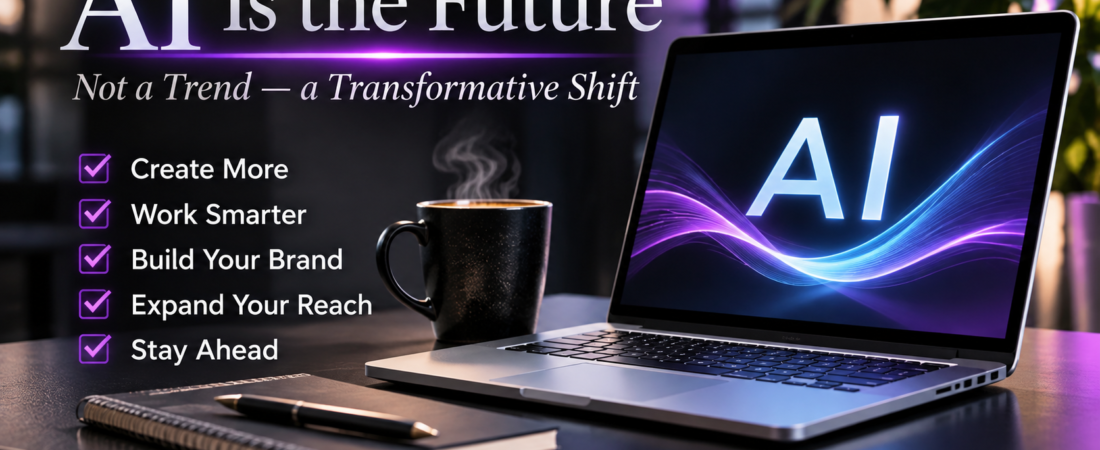
AI is not simply another technological trend. It represents a fundamental shift in how people work, create, communicate, learn and conduct business. Much like the internet, personal computers and smartphones, it is becoming part of the infrastructure of everyday life.
People who learn to work effectively with AI are likely to have significant advantages over those who refuse to engage with it.
We’ve seen this before
Throughout history, transformative technologies have encountered resistance.
- Photography was seen as a threat to traditional painters.
- Electronic music and synthesizers were criticized for undermining musicianship.
- Digital art was dismissed by some as not being real art.
- The internet was initially regarded by many businesses as unnecessary.
- Self-publishing was once considered inferior to traditional publishing.
None of these technologies completely eliminated what came before them. Instead, they expanded what was possible, created new industries and changed the competitive landscape.
AI is a creative equalizer
As an independent artist, writer, musician and entrepreneur, you’re a particularly good example of what AI makes possible. You’re able to pursue projects that previously might have required a production company, recording studio, graphic designer, marketing agency and substantial financial resources.
AI reduces the barriers between having an idea and being able to realize it. That doesn’t guarantee the quality of the result, but it gives independent creators opportunities that were previously inaccessible to them.
Imagination, judgment, originality and artistic direction still matter enormously.
Being critical of AI isn’t necessarily a bad thing
There are legitimate concerns surrounding copyright, consent, employment, misinformation, privacy and corporate control. Those concerns deserve serious consideration. Embracing technology doesn’t mean accepting every application of it without question.
However, there is a considerable difference between advocating for responsible AI development and rejecting AI simply because it challenges established ideas about creativity or work.
The future belongs to those who adapt
I don’t believe everyone who refuses to use AI will become irrelevant. There will always be an appreciation for traditional craftsmanship, human performance and handmade artwork. In fact, those things may become more valuable precisely because of AI.
But I do believe that refusing to understand AI will increasingly become a competitive disadvantage.
The greatest advantage will likely belong to people who combine human creativity, expertise, critical thinking and technological capability rather than relying exclusively on either human effort or artificial intelligence.
AI doesn’t make human creativity obsolete. It changes what human creativity is capable of accomplishing.
And perhaps the most interesting thing about this particular technological revolution is that it gives individuals the opportunity to become their own publishers, production studios, record labels and creative agencies.
For independent creators, that is an extraordinary shift in power.